Insurance and Safety: Our Commitment to Protection
 Insurance and safety are not optional extras; they form the foundation of how we operate every day. This page explains our approach to maintaining a secure working environment and robust protection against liabilities. We describe the key elements of our programme, including public liability insurance, staff training, provision of personal protective equipment (PPE), and a clear risk assessment process. By integrating workplace insurance and safety into every task, we reduce harm to people, property and project timelines while ensuring compliance with industry expectations.
Our approach to Insurance & Safety balances prevention and protection. Prevention focuses on safe systems of work, competence and high standards of supervision. Protection is delivered through documented insurance coverages, notably comprehensive public liability cover and related policies tailored to the specific risks of our operations. We believe that a well-managed combination of safety management and insurance risk transfer gives clients, staff and the public confidence in our ability to manage unforeseen events.
 Public liability insurance is central to our risk transfer strategy. We maintain an appropriate public liability insurance policy that covers third-party injury and property damage arising from our activities. This cover is regularly reviewed to reflect changes in scale, scope and statutory requirements. Our public liability cover works hand in hand with active on-site controls: responsive incident reporting, thorough investigations and timely corrective actions that reduce the frequency and impact of claims.
Staff Training, Competence and Ongoing Development
Competent people create safe outcomes. We invest in a structured staff training programme that includes induction, role-specific instruction, and recurrent refresher courses. Training ranges from awareness sessions on insurance and liability implications to practical skills such as safe equipment operation and emergency response. Training records are maintained and audited, and supervisors are assessed for leadership in safety to ensure that learning is embedded in daily practice.
 Our training strategy also covers legal and insurance awareness so that staff understand how their behaviour affects cover and claims. Topics include understanding contractual obligations, how to document incidents correctly, and the importance of preserving evidence without compromising safety. We use mixed methods — classroom sessions, toolbox talks, e-learning and on-the-job coaching — to reach different learning styles and to reinforce key messages consistently across the workforce.
Key training components include:
- Induction and site-specific safety briefings for all new starters and visitors
- Technical competency training for equipment and high-risk tasks
- Behavioural safety and human factors to reduce error-related incidents
- Insurance awareness so employees understand how incidents may affect cover
- Emergency response and first aid tailored to site hazards
Personal Protective Equipment (PPE) and Practical Controls
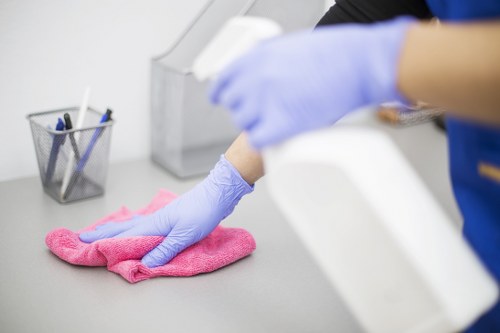
 The right PPE is a vital control when hazards cannot be fully eliminated. We provide appropriate protective equipment at no cost to our staff and ensure items are fit for purpose, properly maintained and replaced according to manufacturer guidance. Typical PPE supplied includes high-visibility clothing, safety helmets, eye and face protection, gloves suited to the task, and respiratory protection where required. Selection is based on risk assessment outcomes and documented in our site safety plans.
Our PPE programme emphasises correct selection, fit testing and user training. We carry out routine inspections and audits to verify compliance, and supervisors are empowered to stop work where PPE is inadequate or not used correctly. Beyond PPE, practical controls such as guarding, exclusion zones and safe systems of work reduce dependence on personal protection alone — this layered approach strengthens both safety and insurance outcomes.
 Risk assessment is the backbone of all safety and insurance decisions. We follow a consistent process that identifies hazards, evaluates risk, implements controls and monitors their effectiveness. A simple, repeatable structure ensures transparency and enables continuous improvement: identify, analyse, control, monitor and review.
Risk assessment process — step by step
- Identify hazards: Systematically record physical, chemical, biological and human factors that could cause harm.
- Assess risk: Evaluate the likelihood and severity of potential incidents, and prioritise actions where risk is highest.
- Control measures: Apply the hierarchy of controls — eliminate, substitute, engineer, administrate, and use PPE as a last resort.
- Document decisions: Keep clear records that link chosen controls to residual risk and any insurance implications.
- Review and learn: Monitor the controls’ performance, update assessments after changes or incidents, and feed lessons into training and policy.
All assessments are proportionate to the activity and are signed off by competent personnel. We use these records to inform insurance underwriting conversations and to demonstrate a proactive risk management approach to regulators and partners. Where external contractors work with us, their risk assessments and insurance certificates are checked and approved before work starts.
In summary, our health and safety plus insurance framework is designed to protect people, assets and reputation. By combining robust public liability insurance with active hazard control, ongoing staff development and clear risk assessment practices, we create a resilient model that supports safe delivery of services and projects. Our safety and insurance commitments are continuously reviewed to reflect operational changes and to drive better outcomes for everyone involved.